
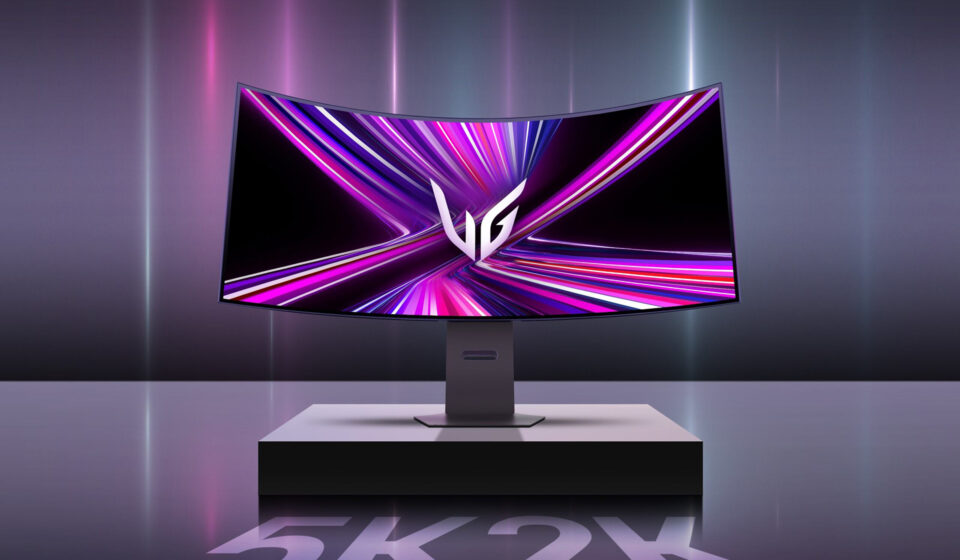

There is a point in gaming when the screen stops feeling like a screen. It happens when a racing game pulls into a fast corner, and every movement feels immediate. When a character moves through a dark environment and details remain visible in the shadows. When a competitive match becomes so intense that you barely have time to think before reacting.
That is the experience a good gaming monitor can create. Spending time with the LG UltraGear range makes it clear that the difference isn’t necessarily about having the biggest screen or the most impressive spec sheet. It is about how naturally the technology disappears into the experience.
The first thing that becomes noticeable is smoothness. Fast games can expose the limitations of an ordinary display very quickly. Rapid camera movements can look less fluid, objects moving across the screen can lose definition, and screen tearing can interrupt what should otherwise be an immersive experience.
UltraGear’s high refresh-rate displays make movement feel considerably more natural. With options reaching 240Hz and beyond across the range, the screen is able to keep pace with fast gameplay. The difference is particularly apparent in competitive titles, where quick reactions are part of the game. The experience feels less like watching events happen on a screen and more like responding directly to them.
Then there are the moments when speed takes a back seat to atmosphere. Story-driven games, open-world adventures and cinematic titles are built around visual detail. A sunset across a virtual landscape, the lighting inside a dark room or the subtle differences between colours can completely change the mood of a scene. This is where UltraGear’s OLED displays stand out. The combination of deep blacks, strong contrast and vivid colour gives games a sense of depth that is difficult to appreciate until it is experienced.
It also changes how familiar games look. Scenes that may have previously seemed flat or muted can reveal considerably more detail. Dark areas have greater definition, bright elements stand out more clearly, and colours feel richer without becoming distracting.
Screen size changes the experience too. A larger monitor does not automatically make a game better, but a wider field of view can make certain games feel substantially more immersive. UltraGear’s curved and ultrawide displays are particularly suited to racing, simulation and open-world games, where seeing more of the environment adds to the sense of being inside the game.
There is something particularly satisfying about a wide racing track stretching across the screen, or being able to see more of a game’s environment without constantly adjusting the camera. The curved design also makes the edges of a large display feel less distant, creating a more natural viewing experience.
Adaptive sync technologies such as AMD FreeSync and NVIDIA G-SYNC compatibility, available on selected UltraGear models, help reduce tearing and stuttering. In practice, that means fewer interruptions between the graphics card and the display. The technology is doing its job when it becomes something that is barely noticed.
The same applies to responsiveness. A fast response time is not impressive simply because the number looks good on a product page. It matters when a quick movement remains clear, when an opponent appears exactly where expected, or when a last-second turn in a racing game feels precise rather than delayed.
That is also why choosing a gaming monitor is ultimately a personal decision. Competitive gamers may want the highest refresh rate possible. Someone who spends weekends exploring expansive RPG worlds may care more about OLED contrast and resolution. Console players may value features such as HDMI 2.1 and 4K support, while someone building a dedicated gaming room may prefer an ultrawide curved display.
There is no single definition of the perfect gaming setup because there is no single way to play.
What UltraGear does particularly well is make those differences easier to appreciate. The range covers the competitive player chasing every possible advantage, the enthusiast who wants games to look spectacular and the casual player who simply wants a better experience after a long day.
And once the UltraGear experience becomes the standard, going back to an ordinary display can be surprisingly difficult.