
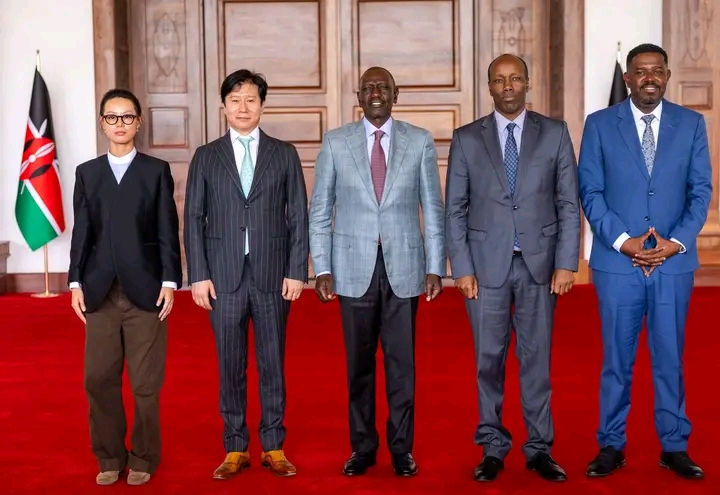

President William Ruto has signed a memorandum of understanding (MOU) for a proposed $3 billion (about KSh390 billion) integrated green mobility project that could transform Kenya into a major electric vehicle manufacturing and assembly hub.
The project will establish an integrated electric mobility ecosystem featuring vehicle assembly plants, solar-powered charging infrastructure and a digital platform supporting the growing green transport industry.
Speaking during the signing ceremony in Nairobi on Tuesday, October 6, 2026, Ruto said the investment would help Kenya reduce its reliance on imported finished products while creating jobs and increasing local value addition.
The President said Kenya could no longer afford to export jobs by importing products that could be manufactured locally.
“We will not prosper by exporting what we grow and mine while importing what we use. Value must be added here. Skills must be built here. Jobs must be created here,” Ruto said.
50,000 electric vehicles annuallyUnder the proposed project, Kenya will establish an electric vehicle assembly plant with an annual production capacity of 50,000 four-wheel vehicles.
A second facility is expected to produce up to 100,000 electric two-wheelers and light mobility vehicles annually, creating a significant boost to Kenya’s emerging electric mobility sector.
The investment is projected to generate approximately 2,000 direct jobs, more than 20,000 indirect jobs across suppliers, logistics companies and service providers, and up to 80,000 additional opportunities in fleet management, operations and related services.
Ruto said the economic impact would extend beyond factories to thousands of Kenyans expected to participate in the wider electric mobility value chain.
“Behind these numbers are people,” the President said, citing young technicians, engineers, boda-boda riders and other workers who could benefit from the transition to electric mobility.
Kenya eyes regional green mobility hub
Ruto described the MOU as a framework for one of the largest electric mobility investments in the region, saying it comes as Kenya seeks to expand manufacturing, create employment for young people and attract investment into emerging industries.
The proposed development is also expected to support the expansion of electric public and private transport by increasing access to locally assembled vehicles and charging infrastructure.
The President said the project forms part of his administration’s broader push to promote local manufacturing, value addition and industrialisation, arguing that African economies must move away from exporting raw materials and importing finished goods.
“This memorandum establishes a framework for an integrated green mobility ecosystem with a proposed investment of US$3 billion. It is one of the largest electric mobility commitments in our region,” Ruto said.
If implemented as proposed, the project would position Kenya as a potential regional manufacturing and technology hub for electric mobility, while supporting the country’s transition towards cleaner transport.