
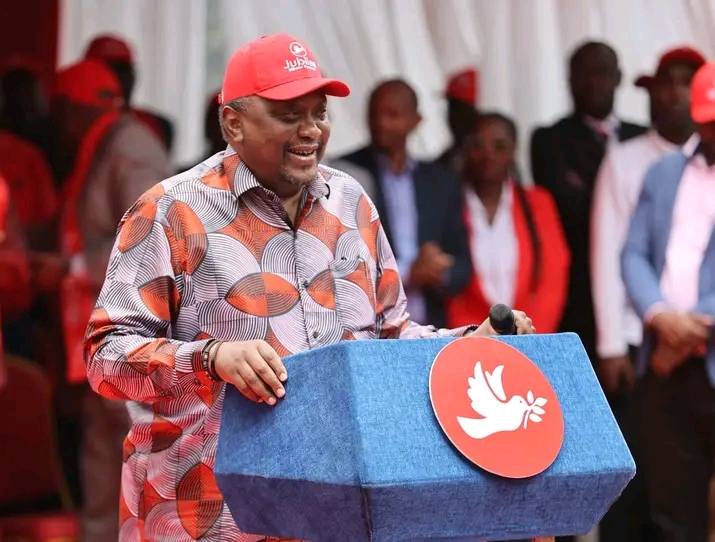

Retired President Uhuru Kenyatta has resigned as Chairperson of the Azimio la Umoja One Kenya Coalition, paving the way for a new leadership chapter in the opposition alliance ahead of the 2027 General Election.
Kenyatta formally communicated his decision in a letter dated October 5, 2026, shortly after handing over the leadership of the Jubilee Party to former Interior Cabinet Secretary Fred Matiang’i.
The former President said his resignation was intended to allow a new generation of leaders to take greater responsibility for the coalition, while stressing that he was not walking away from the political movement.
Kenyatta described the decision as part of the renewal of democratic institutions rather than a departure from the political journey that brought the coalition parties together.
The development comes at a critical stage for the opposition, which has already embarked on a major restructuring and rebranding exercise.
The coalition is now operating under the name The Ukombozi Alliance (TUA), with Wiper leader Stephen Kalonzo Musyoka serving as its Party Leader.
The Office of the Registrar of Political Parties has also reserved the TUA name, according to Kalonzo.
Kalonzo moves to calm leadership concerns
In a statement issued on Wednesday, October 7, Kalonzo welcomed Kenyatta’s decision and thanked the retired President for his contribution to the coalition.
Kalonzo, however, moved quickly to dismiss suggestions that Uhuru’s exit had created a leadership vacuum.
He explained that the position held by Kenyatta as Chair of the Council was separate from that of Party Leader, which he currently occupies.
According to Kalonzo, the Council Chair provides counsel, convening and guidance, while the Party Leader is responsible for the political and executive management of the organisation, including its day-to-day affairs and representation before state institutions.
“There is no vacuum at the helm of Ukombozi, and no change in the party’s leadership, direction or programme,” Kalonzo said.
Kalonzo also said Kenyatta remains part of the broader political family and will continue to provide counsel when required.
The alliance plans to invite the former President for an official visit, during which a formal handover ceremony will be held.
Leadership reshuffle looms
Kenyatta’s resignation nevertheless opens an important question over who will occupy the influential Council Chair position as Ukombozi reorganises ahead of the 2027 polls.
Reports indicate that names including Democracy for Citizens Party (DCP) leader Rigathi Gachagua and Siaya Governor James Orengo have been floated in discussions over the position.
Any decision on the new council leadership could have wider implications because Ukombozi is seeking to consolidate opposition parties and political figures under its new identity.
The restructuring also comes as opposition leaders position themselves for a potentially crowded 2027 political contest, with parties and coalitions seeking to establish their leadership structures, alliances and negotiating positions well before the election.
Uhuru’s role changes, but influence remainsAlthough Kenyatta has relinquished his formal leadership position, his resignation letter made clear that he does not regard the move as an exit from the coalition.
His continued membership means he could remain an important source of counsel to the alliance, even without holding a formal leadership office.
The resignation also follows a broader transition in Kenyatta’s political role after he handed over Jubilee Party leadership to Matiang’i.
The change came after a High Court ruling concerning the holding of formal political party leadership positions by retired presidents.
For Ukombozi, the immediate challenge will be translating the rebranding into a functional political structure capable of bringing together its constituent parties and attracting additional partners.
Kalonzo has insisted that the alliance will remain broad and inclusive, particularly for Kenyans who support constitutionalism, democratic governance and the rule of law.
With the 2027 General Election approaching, Uhuru’s departure therefore represents more than a change of office.
It marks another stage in the opposition’s ongoing reorganisation, with Ukombozi now expected to define its leadership, expand its political partnerships and sharpen its strategy under Kalonzo’s stewardship.