

域兴•城新•民安 |“智” 水榕城:全民共治的幸福密码
Reporter: Chen Sijia
Water is the lifeblood of Fuzhou. This ancient capital of the Min region, nestled between mountains and the sea, once suffered from frequent flooding, clogged waterways, and deteriorating water quality. Today, a technology-driven, community-wide approach to water management is reshaping the city’s vision of harmonious coexistence between people and clear waters.
Technology Ensures Safety
Fuzhou faces constant challenges from typhoons and torrential rains. The Urban Water System Joint Dispatch and Coordination Center has established a “smart hub” for urban water safety, integrating IoT, big data, and digital twin technologies to enable integrated early warning, analysis, scheduling, and response.
“When an emergency flood-control alert is issued, personnel from all relevant departments quickly converge in the command center to coordinate operations,” said Chen Yun, Deputy Director of the Science and Information Department at the Fuzhou Urban Hydrographic Net Joint Drainage and Dispatch Center, pointing to the smart display screen. “The drainage pipeline information system is a crucial component of our flood-prevention infrastructure. Using pipeline inspection robots, we’ve surveyed, repaired, and documented over 2,500 kilometers of underground pipes—essentially giving the city’s subterranean network a comprehensive health check.”
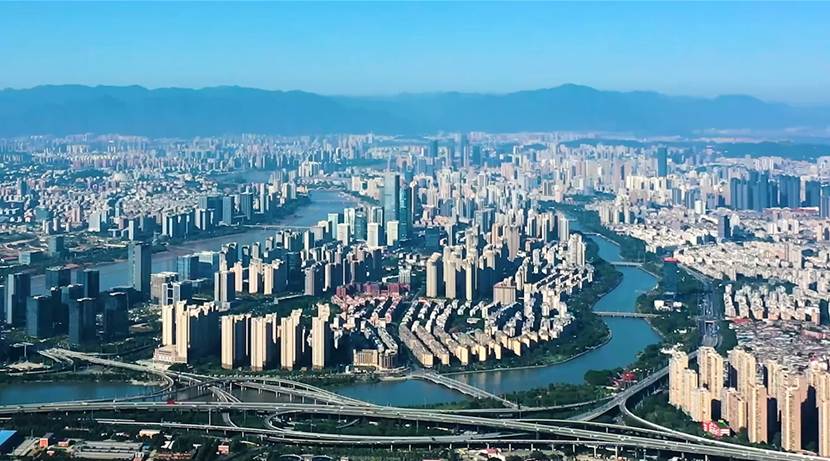
Adopting a technology-led, participatory water management strategy, Fuzhou is reinventing its urban landscape as one where people and clean waterways thrive together.
In addition to traditional river patrols, Fuzhou has adopted an AR-based patrol model, employing drones to conduct semi-annual aerial surveys of the city’s 139 inner rivers. Data on water quality, water levels, and hydraulic structures are compiled into AR models of the waterways, providing valuable insights for maintenance and management.
Technology is not just cold code; it is the confidence that turns danger into safety. According to Yun, during Typhoon Haikui’s extreme rainfall, Fuzhou implemented a coordinated strategy of “Storing water upstream, discharging it midstream, and pumping it downstream,” staggering reservoir releases, activating the Doumen regulating reservoir, and deploying grid-based teams to flood-prone areas. Within eight hours, standing water was cleared, marking a shift from reactive rescue to proactive defense.
Ecology Revitalizes the City
In waterway management, flood prevention is only the foundation; the real goal is to restore the ecological vitality of urban rivers. Over the past decade, Fuzhou has steadily advanced its water ecology initiatives through a comprehensive, systematic approach: reconnecting isolated river segments to restore water flow, controlling pollution sources to prevent contaminants from entering the waterways, restoring the ecological chain along riverbeds, water surfaces, and banks, and supplementing these efforts with intelligent monitoring to safeguard the results.
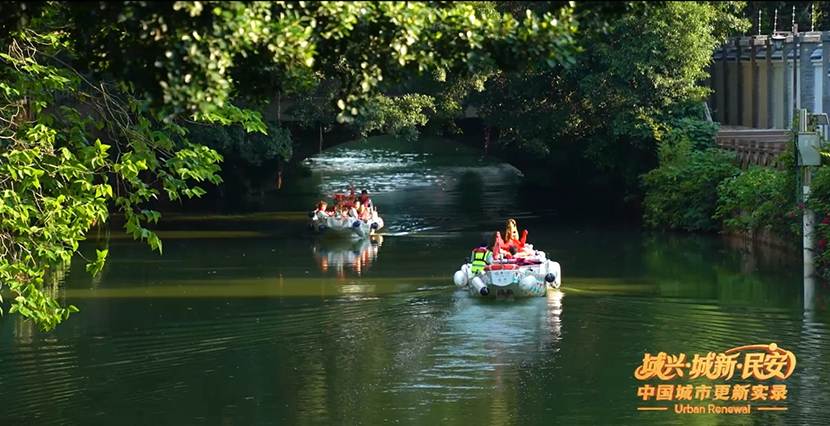
Tourists enjoy boat rides on Fuzhou’s inner rivers
“In the early years, aquatic biodiversity in our rivers was quite limited. We partnered with research institutes to design ecological solutions tailored specifically to Fuzhou,” said Li Tao, Manager of the Construction Department at Fuzhou Water Group, gazing at the crystal‑clear West Lake. “We first launched a pilot project there, dredging the lake and introducing shellfish, aquatic plants, and fish species known for their water‑purifying abilities. In just half a year, the water began to clean itself, with visibility reaching up to 1.5 meters.” Today, Fuzhou has built over 500 kilometers of riverside greenways and parklands, raising water levels in its inner rivers by 1.2 to 1.8 meters.
Fuzhou also ingeniously harnesses the natural tidal forces of the Min River, drawing 16.5 million tons of water daily to replenish its waterways—saving 36.67 million kilowatt-hours of electricity annually and reducing carbon emissions by nearly 29,000 tons. At the same time, the city is tapping into its rich Mindu culture, linking historic residences and heritage districts to create cultural and recreational waterfront spaces, and opening 29 tourist routes along its inner rivers, totaling 75 kilometers of navigable waterways. By transforming its rivers from objects of management into public spaces for leisure and recreation, Fuzhou has achieved a remarkable transition from “water control” to “water appreciation.”
A City United in Protecting Its Waters
Water management has never been the sole responsibility of government agencies—it is a collective effort involving the entire community. Fuzhou has pioneered a dual-river-chief system, pairing government river chiefs with corporate river chiefs and community volunteers to build a robust network of water guardians. Government river chiefs oversee overall coordination; corporate chiefs handle practical tasks such as surface cleanup and water-quality monitoring; while volunteer river chiefs work directly in neighborhoods to promote water conservation and address improper behavior. Citizens can also report issues via a mobile app or the 12345 hotline, ensuring rapid response and resolution.
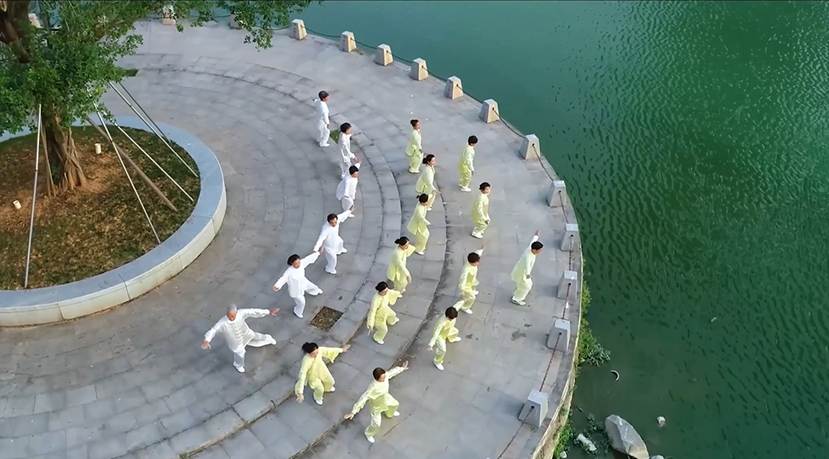
Citizens relax and exercise in a park along an inner river in Fuzhou
Wu Ruling, a volunteer river chief who lives by the Baima River, shared her reflections: “I’ve lived here for more than twenty years. When I first moved in, the river was dirty, smelly, and neglected—like an open ditch. Now, when I open my window, I see greenery; when I step outside, I’m in a park. Fish swim in the river, egrets have returned, and the riverside parks are bustling with people enjoying themselves. Life here is truly pleasant.”
Wu Xiangyan, a corporate river chief with eight years of experience in water management, echoed this sentiment: “Watching the river gradually become cleaner—seeing adults chatting by the water and children playing on the banks—I truly feel the happiness this work brings to the people of Fuzhou.”
With technology ensuring safety, ecology revitalizing the city, and citizens united in protecting its waters, Fuzhou has created a model of people-centered water governance, making clean rivers, lush banks, beautiful scenery, and harmonious communities the everyday reality of this ancient metropolis.