
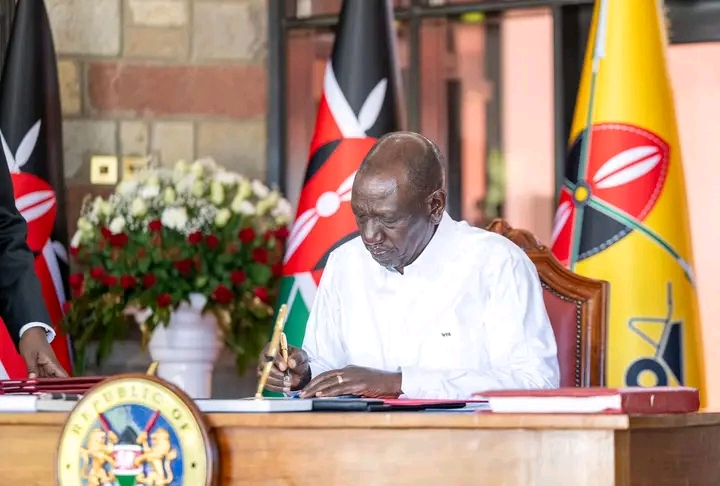

President William Ruto has signed into law two Bills aimed at increasing funding to county governments and addressing governance disputes in county assemblies.
The laws provide for Sh71.09 billion in additional allocations to counties for the 2026/2027 financial year and introduce clearer procedures for the removal of county assembly service board members, clerks and other employees.
Ruto assented to the County Governments Additional Allocations Bill, 2026, and the County Assembly Services Amendment Bill, 2023, during a ceremony at Eldoret State Lodge on Monday, October 19, 2026.
Counties to Receive Sh71 Billion
The County Governments Additional Allocations Act provides for Sh71,091,926,967, an increase of Sh425.6 million from the Sh70.67 billion allocated in the preceding financial year.
The money will come from the national government’s share of revenue, alongside loans and grants from development partners.
It includes conditional allocations for county headquarters, universal health coverage workers transitioning to permanent and pensionable terms, and community health promoters (CHPs).
Deputy Chief of Staff Josephat Nanok, who presented the Bill for presidential assent, said the legislation would enable counties to plan their expenditure and meet financial obligations.
He added that county governments had been waiting for the law to take effect so they could incorporate the allocations into their budgets and utilise the funds.
The legislation also introduces reporting requirements to strengthen accountability.
The Cabinet Secretary responsible for the National Treasury must publish quarterly reports on actual transfers to counties by the 13th day after the end of each quarter.
County treasurers are also required to record conditional allocations in their accounts and include them in consolidated quarterly and annual reports.
The Bill was introduced in the Senate by Mandera Senator Ibrahim Ali Roba and passed by both Houses of Parliament without mediation before being referred to the President.
The impact of the allocations will depend on timely disbursements, prudent spending and effective implementation of county projects and public services.
New Safeguards for County Assembly Officials
The County Assembly Services Amendment Act, 2023, seeks to address administrative disputes and governance challenges involving county assembly service board members, clerks and employees.
Sponsored by Marsabit Senator Mohammed Chute, the legislation clarifies the roles of service boards and assembly management, particularly in cases involving the removal of officials and conflicts over responsibilities.
Presenting the Bill, the Senate Clerk cited cases of board members, clerks and staff facing removal or threats of dismissal, alongside disagreements between service boards and management under county assembly clerks.
Under the new law, the removal of county assembly service board members must follow a standard procedure involving an inquiry committee and a subsequent vote by the county assembly.
The legislation also provides greater security of tenure for county assembly clerks and clarifies procedures governing their suspension or removal.
Other provisions address the supervision of county assembly employees and the rights and benefits of staff on secondment.
The changes are intended to ensure that disciplinary action and administrative decisions follow established procedures, reducing uncertainty and disputes within county assemblies.
Strengthening Devolution
The two laws address separate but complementary aspects of devolution: providing counties with resources to deliver services and improving governance within county assemblies.
While the additional allocations are expected to support development and healthcare programmes, the amendments seek to promote administrative stability, accountability and clearer lines of responsibility.
Their success will depend on effective implementation, transparent management of public funds and adherence to the new procedures.