
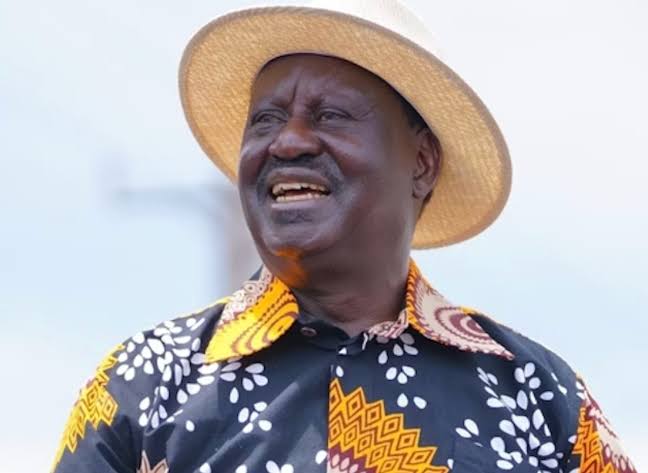

As Kenya remembers Raila Odinga, his legacy is inseparable from the struggle for multiparty democracy, constitutional reform, political freedom and the right of citizens to demand accountability from their leaders.
For decades, Raila Amolo Odinga stood at the centre of Kenya’s political struggles, a figure whose journey reflected the country’s difficult transition from one-party rule to a more competitive and constitutionally governed democracy.
His political story was marked by imprisonment, political persecution, street protests, disputed elections, negotiations and the pursuit of constitutional reforms.
To his supporters, he represented resistance against authoritarianism and a determination to see Kenyans enjoy greater political freedom.
His critics, however, often questioned his political alliances, strategies and decisions. Yet his role in some of the defining moments of Kenya’s democratic journey remains a significant part of the nation’s history.
The Price of Challenging One-Party Rule
Raila’s fight for democracy unfolded during a period when Kenya was governed under a powerful one-party political system that limited political competition and dissent.
In 1982, following the failed coup attempt against President Daniel arap Moi’s government, Raila was detained without trial.
He spent several years in detention and was released in 1988, only to be detained again in 1989. He was released in 1991 after years of imprisonment and political pressure.
His detention became part of the wider history of political repression experienced by Kenyans who challenged the government during that era.
The struggle was not his alone. Other political activists, lawyers, religious leaders and pro-democracy campaigners also risked imprisonment and intimidation while demanding political pluralism and respect for civil liberties.
Their efforts helped intensify pressure for reforms that would eventually change the country’s political landscape.
The Return of Multiparty Democracy
In 1991, Kenya repealed Section 2A of the Constitution, ending the legal monopoly of the Kenya African National Union (KANU) and paving the way for multiparty politics.
The change followed sustained pressure from opposition politicians, civil society organisations, religious leaders and ordinary citizens who demanded the freedom to organise and compete politically.
Raila became one of the prominent figures in the emerging opposition movement.
He contested the 1992 presidential election and continued participating in the country’s evolving multiparty political system.
Although the restoration of multiparty politics did not immediately resolve concerns about electoral fairness, political intimidation or the concentration of state power, it marked a major turning point in Kenya’s democratic development.
For many Kenyans, the period demonstrated that political change could be pursued through collective action and sustained public pressure.