
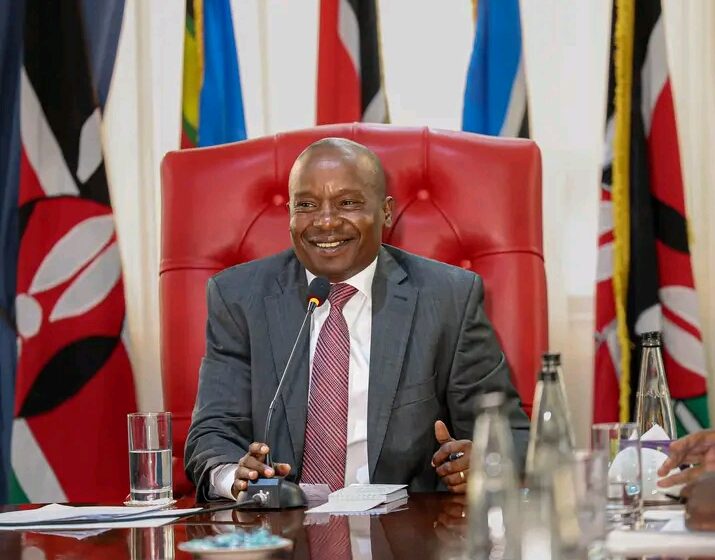

Deputy President Kithure Kindiki has announced plans to intensify Kenya’s crackdown on illicit alcohol, warning that consumers could also face tougher legal consequences as the government moves to dismantle the networks behind the illegal trade.
Kindiki said the government intends to treat illicit alcohol trafficking as a serious national security and public health threat, with proposed legal reforms targeting manufacturers, suppliers, financiers, distributors and other individuals involved in the trade.
Speaking after a meeting with security agencies, governors and regulators in Karen, Nairobi, on Wednesday, October 21, 2026, the Deputy President said the crackdown would be sustained and accompanied by stricter penalties.
“The law also will be reviewed to make it extremely punitive,” Kindiki stated.
He warned that enforcement would extend across the entire illicit alcohol supply chain, including those who facilitate the production and distribution of illegal drinks.
“Any person within the supply chain of inputs of illicit alcohol or the drinks themselves from manufacturers to suppliers, to aiders and abettors, enablers, financiers, and even consumers,” he said.
Kindiki explained that the government was intensifying its response because of the devastating effects of illicit and adulterated alcoholic drinks on public health and national security.
“Because the effects of these drinks is extremely costly on the security and the public health of the people of Kenya,” he added.
The proposed measures signal a broader enforcement strategy aimed at dismantling the networks that manufacture, finance and distribute illegal alcoholic drinks, rather than focusing solely on individual sellers.
However, the proposed changes would need to be enacted into law before any new offences or penalties could be enforced.
The announcement does not automatically make every consumer of illicit alcohol guilty of organised crime under a new law.
Government Sets Up Permanent Crackdown Secretariat
Kindiki also announced plans to establish a permanent secretariat at Harambee House Annex to coordinate the government’s campaign against illicit alcohol.
The office is expected to bring together security agencies and regulatory bodies responsible for identifying and dismantling illegal manufacturing and distribution networks.
The government is further considering legal provisions that would allow authorities to seize assets linked to the illicit alcohol business, potentially targeting the financial interests behind the trade.
Figures presented during the briefing indicated that security agencies had conducted nine raids on premises associated with illegal ethanol operations over the preceding 10 days.
The operations also targeted 116 sellers of illicit alcoholic drinks as authorities stepped up efforts to curb the trade.
Kindiki maintained that the government would not abandon the campaign after the current operations, insisting that enforcement would continue indefinitely.
“This exercise will continue uninterrupted permanently,” he declared.
Kindiki Warns Politicians Against Interference
The Deputy President also cautioned political leaders against interfering with security officers involved in the crackdown, signalling the government’s intention to give enforcement agencies room to carry out their duties.
The planned legal reforms would expand the government’s approach by targeting not only those selling illicit alcohol but also the manufacturers, financiers, suppliers and other facilitators who sustain the illegal business.
The effectiveness of the new strategy will depend on the proposed legal amendments, coordination among enforcement agencies and the implementation of measures to distinguish consumers from individuals organising and financing the illicit trade.