
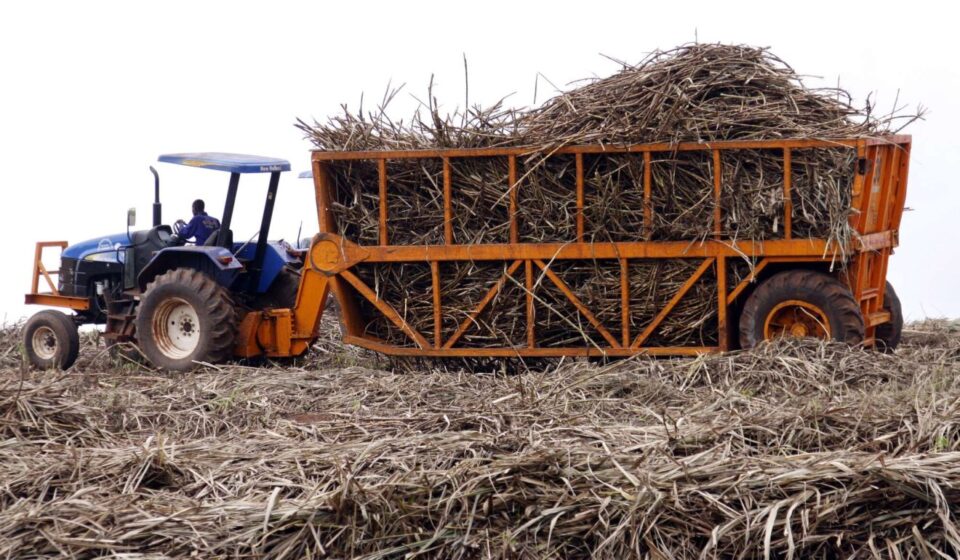

Kenya’s sugar industry recorded its strongest monthly performance on record in July 2026, with sugar production rising to 91,022 tonnes as sugarcane deliveries crossed the one-million-tonne mark for the first time.
Data from the Kenya Sugar Board (KSB) shows that 1.013 million tonnes of sugarcane were delivered to local mills during the month, representing more than double the 501,604 tonnes delivered in July 2025.
The July performance also surpassed the previous monthly record of 998,010 tonnes of cane recorded in June.
The surge in cane supply helped push sugar production up 115.4 per cent year-on-year, from 42,255 tonnes in July 2025.
Cumulatively, Kenya produced 528,874 tonnes of sugar between January and July 2026, representing a 44.5 per cent increase compared with the same period in 2025.
Cane deliveries over the seven-month period reached 5.94 million tonnes, up from 4.12 million tonnes in the corresponding period last year, representing a 44.2 per cent increase.
The latest figures point to a significant recovery in an industry that has struggled with inadequate cane supplies, ageing machinery, mill closures, farmer arrears and accumulated debts.
Revival of dormant sugar mills
The increase in production has coincided with the return of several previously idle or underperforming sugar factories.
Mumias Sugar’s operating business, which is being run under a lease arrangement by Sarrai Group, processed 638,086 tonnes of cane in 2024, compared with 193,377 tonnes a year earlier, representing a 230 per cent increase.
The government has also leased Nzoia, Chemelil, Muhoroni and South Nyanza Sugar Company (Sony) to private operators as part of efforts to restore production at state-owned mills.
The four factories have a combined installed milling capacity of about 11,200 tonnes of cane per day, according to Treasury disclosures, increasing the industry’s capacity to process cane and creating additional demand for farmers’ produce.
The revival of milling capacity has been accompanied by an increase in cane availability, allowing factories to operate closer to their potential.
Government debt restructuring
The recovery follows extensive restructuring of the public sugar sector, including the government’s write-off of about KSh117 billion in legacy debts and tax arrears owed by public sugar companies.
The restructuring was also accompanied by efforts to settle outstanding payments to farmers and employees, addressing some of the financial constraints that had contributed to the deterioration of the industry.
The Sugar Act 2024 further changed the regulatory framework by re-establishing the Kenya Sugar Board as a standalone regulator and providing for the Sugar Development Fund and the Kenya Sugar Research and Training Institute.
The law also provides for a Sugar Development Levy to support investment across the sector.
Sugar levy to fund industry development
A 4 per cent Sugar Development Levy was introduced under the Sugar Development Levy Order, 2025. The levy applies to domestic sugar based on its ex-factory price and to imported sugar based on its cost, insurance and freight value.
Under the Sugar Act, funds raised through the levy are distributed across several areas, including cane development and productivity enhancement, factory development and rehabilitation, research and training, infrastructure in sugar-producing regions, administration of the regulator and support for sugarcane farmers’ organisations.
Forty per cent of the levy is earmarked for cane development and productivity enhancement, while 15 per cent goes towards factory development and rehabilitation and another 15 per cent towards research and training.
The aim is to improve productivity from the farm to the factory while supporting the long-term competitiveness of locally produced sugar.
Farmers benefit from higher cane deliveries
The increase in cane deliveries has also translated into higher earnings for sugarcane farmers.
The average cane price was estimated at KSh5,643 per tonne, compared with KSh5,343 per tonne during the same period a year earlier.
The higher prices, combined with increased volumes delivered to factories, have provided a boost to farmers in major sugar-producing regions.
However, the rapid increase in deliveries has also placed greater pressure on millers to improve harvesting, transportation, weighing and payment systems.
The Kenya Sugar Board has recently moved to tighten oversight of cane deliveries, including measures targeting delays in farmer payments and alleged irregularities at weighbridges.
Imports fall as local production rises
The production recovery is also beginning to affect Kenya’s sugar import requirements.
KSB data shows that sugar imports fell by 52 per cent month-on-month in July, while closing stocks increased by 14.3 per cent.
The increase in domestic production has also prompted the government to temporarily halt sugar imports by local millers, with the Agriculture Ministry saying improved local output had reduced the immediate need for imported sugar.
Agriculture officials have said monthly domestic sugar production has risen from about 40,000 tonnes in 2022 to more than 80,000 tonnes, with July’s 91,022 tonnes setting a new record.
Despite the improvement, Kenya remains structurally dependent on imports because domestic consumption is higher than local production.
Annual sugar demand is estimated at about 1.2 million tonnes, including roughly one million tonnes of brown/table sugar and about 200,000 tonnes of refined white sugar used largely by industries. Kenya consumed approximately 1.216 million tonnes in 2025.
The country imported about 477,551 tonnes of sugar in 2025, while approximately 65,081 tonnes of brown sugar were imported between January and July 2026.
Local refining remains a key challenge
While increased cane production is reducing the need for imported table sugar, Kenya still faces a significant gap in refined sugar.
The government is therefore pursuing local refining of imported raw sugar as an interim measure while efforts continue to increase domestic cane production and establish greater refining capacity.
Mombasa Sugar Refinery Limited, which has an installed refining capacity of about 150,000 tonnes annually, has begun refining imported raw sugar. According to industry information, the refinery had imported 27,839 tonnes of raw sugar for the process.
The longer-term strategy is to expand local cane acreage and productivity while improving milling efficiency, value addition and refining capacity.
Impact on consumers
The increase in production is expected to improve availability and reduce pressure on imports, although the effect on retail prices has not been immediate.
KSB’s July market highlights put the average retail price at about KSh155 per kilogramme, while the average cane price was reported at KSh5,500 per tonne.
The industry’s improved supply could nevertheless provide greater price stability if high cane availability and mill efficiency are sustained.
Outlook for the sugar sector
The July production record marks a major turnaround from the cane shortages that constrained Kenyan sugar factories in previous years.
The challenge now is to sustain the recovery.
Industry stakeholders will be watching whether the government and private mill operators can maintain adequate cane supplies, ensure timely payments to farmers, improve factory efficiency and channel Sugar Development Levy funds into productive investments.
Kenya’s domestic production has risen sharply, but the country still has a substantial gap between annual consumption and local output.
Maintaining the current growth in cane production while expanding milling and refining capacity could therefore determine whether the country can progressively reduce its dependence on imported sugar.
For farmers, the immediate priority will be maintaining reliable markets and timely payments for cane, while for consumers, the key measure will be whether increased local production eventually translates into more stable and affordable sugar prices.