
Kenya is looking to adopt China’s automated port model to improve efficiency at Lamu Port, cut cargo-handling costs and position the facility as a regional logistics hub, National Assembly Speaker Moses Wetang’ula has said.
Wetang’ula said lessons from China’s Tianjin Port, where automation, artificial intelligence (AI) and clean-energy systems are used in cargo operations, could help Kenya modernise its maritime infrastructure and attract more shipping lines and investors.
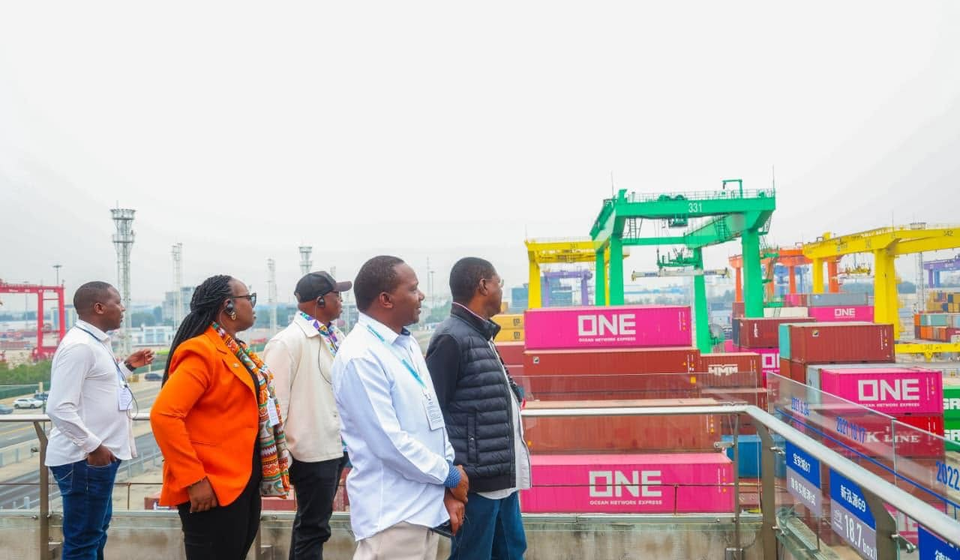
Speaking during a tour of Tianjin Port and the Modern Industrial Exhibition and Exchange Centre in Binhai New Area, the Speaker said Lamu Port had the potential to ease pressure on the Port of Mombasa and provide a gateway for trade with landlocked countries, including South Sudan and Ethiopia.
However, he said Kenya would need to invest in modern cargo-handling systems, digital logistics and customs processes to reduce delays and lower the cost of moving goods.
“What we have seen in Tianjin shows how automation, artificial intelligence and green energy can turn a port into a driver of industrial growth,” Wetang’ula said. “Kenya can apply these lessons to make Lamu more efficient, competitive and attractive to shipping lines and investors.”
Lamu Port is a key component of the Lamu Port-South Sudan-Ethiopia Transport (LAPSSET) Corridor, a regional infrastructure project intended to connect Kenya’s Coast to neighbouring countries through transport and energy infrastructure.
Wetang’ula said cooperation between Tianjin and Lamu could support technology transfer, the adoption of cleaner cargo-handling equipment and the digitisation of customs and logistics operations.
The proposed changes would help reduce the time cargo spends at the port, speed up the movement of goods and lower costs for importers and exporters, he said.
The Speaker was speaking during the 2026 Legislators Forum for Friendly Exchanges in China, where Kenyan legislators are seeking to deepen cooperation with Beijing in trade, technology transfer and industrial development.
He also linked port modernisation to Kenya’s trade imbalance with China, saying the country needed to strengthen domestic manufacturing and expand exports instead of relying heavily on imported finished products.
Kenya imported goods worth about $5.19 billion from China in 2025, compared with exports valued at $130.8 million, according to figures cited by Wetang’ula.
He said an efficient Lamu Port, combined with local manufacturing and value addition, could help Kenyan businesses move products to international markets at lower cost.
Wetang’ula also pointed to potential investments in energy and manufacturing that could support Lamu’s development as an industrial hub. These include a proposed Dangote refinery and a planned green mobility partnership with Endelevu Enterprise Corporation to develop electric vehicle assembly and charging infrastructure.
The proposed investments, he said, could create opportunities for industrial growth and employment along the Coast.
Kilifi North MP Owen Baya said modernising Lamu Port would be critical to creating jobs and supporting investment in the blue economy.
“Lamu cannot remain an underutilised asset. If we automate operations and reduce cargo delays, we create real opportunities for our fishermen, transporters and small traders along the Coast. Port efficiency translates into income at the grassroots,” Baya said.
Nominated MP Irene Mayaka said Kenya should ensure women and young people benefit from employment opportunities arising from investments in port technology, logistics and clean energy.
She called for investment in skills development to prepare young people for emerging jobs in AI-driven port operations and industrial production.
Kiminini MP John Chikati said Parliament would need to support technology adoption with policies that protect Kenya’s long-term economic interests.
He said legislation should promote local content, skills transfer and environmental standards as the country attracts investment in port technology and electric vehicle manufacturing.
Beyond maritime infrastructure, Wetang’ula said Kenya wanted to broaden its economic partnership with China by shifting towards local manufacturing, technology transfer and job creation.
He said cooperation should deliver factories, industrial skills and opportunities for Kenyan producers rather than reinforce dependence on imported finished goods.
The Speaker cited technical and vocational education and training as one area where the partnership had already supported local capacity. He said 144 technical training institutions had received modern equipment, while 314 trainers had undergone training through Kenya-China programmes.
He said further cooperation in agriculture, clean energy and manufacturing could help Kenyan producers increase output, add value to their products and expand exports.
The 2026 Legislators Forum for Friendly Exchanges has brought together more than 60 serving and former legislators from five continents to promote parliamentary dialogue, peace and economic cooperation.