

The Controller of Budget could gain wider powers to oversee billions of shillings held in national and county government funds and levies if proposed changes to the law are adopted.
The proposed reforms seek to address concerns that dozens of government funds operate outside the direct oversight of independent public finance institutions, making it difficult to track how money is collected, held and spent.
The National Assembly Committee on Constitutional Implementation Oversight has recommended amendments to the Public Finance Management Act to enable the Controller of Budget (CoB) to report on funds and levies that currently fall outside her oversight mandate.
The committee raised concerns over the management of 75 funds and levies at the national level, as well as various funds established by county governments.
Among the funds highlighted are the National Infrastructure Fund (NIF), Affordable Housing Levy Fund, Social Health Insurance Fund (SHIF), Hustler Fund and Sovereign Wealth Fund.
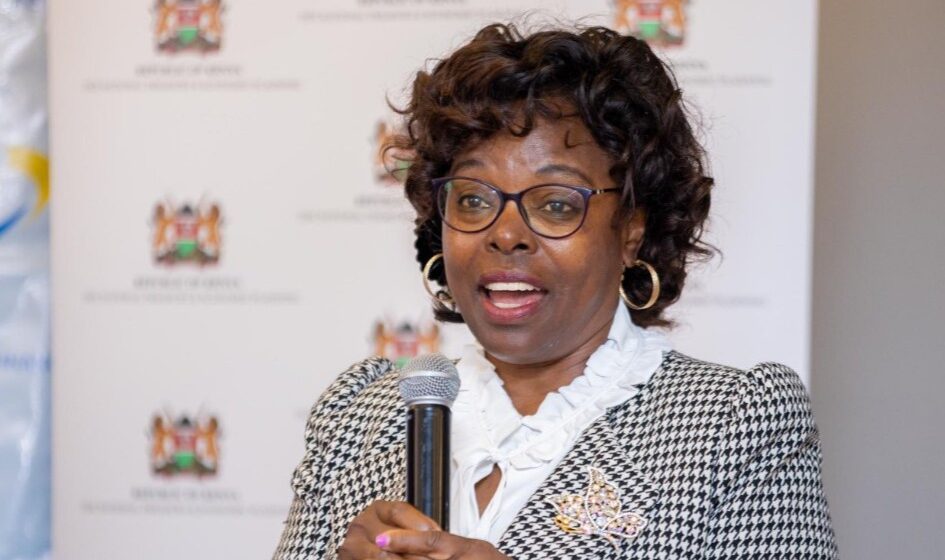
The proposed changes would place such funds under the reporting and oversight of Controller of Budget Margaret Nyakang’o.
The National Infrastructure Fund, for instance, holds about Sh104 billion from the sale of Kenya Pipeline Company shares.
The Affordable Housing Levy Fund has also collected approximately Sh65 billion deducted from workers’ earnings to finance the construction of affordable housing units.
However, the fund currently falls outside the direct oversight of the Controller of Budget.
The committee quoted Nyakang’o as warning that gaps in the law prevent independent oversight of billions of shillings held in government funds and levies.
“The Controller of Budget clarified that all funds and levies fall outside her oversight mandate due to their classification as funds and levies rather than budgeted funds,” the committee said in its report.
Nyakang’o has previously explained that statutory and special funds operate outside the Consolidated Fund, limiting her office’s ability to directly monitor withdrawals and expenditure.
“Anything called a fund or a levy, we will not see it. They are not part of the Consolidated Fund,” Nyakang’o said. “My oversight powers are directly tied to withdrawals from the Consolidated Fund.”
The committee is also proposing amendments to the Controller of Budget Act to give the office enforcement powers to ensure that its recommendations are implemented.
It further wants restrictions on economic reporting removed and sanctions introduced for violations of public finance management requirements.Concerns over government funds also extend to county governments.
Auditor General Nancy Gathungu has warned that more than Sh30 billion held in county public funds could be vulnerable to misappropriation because some of the funds operate outside the Integrated Financial Management Information System (IFMIS).
In a document submitted to Parliament, Gathungu warned that county funds operating outside IFMIS may lack adequate financial controls, increasing the risk of fraud and corruption.
The Public Finance Management Act allows county public funds to be established with the approval of the County Executive Committee and County Assembly.
However, Gathungu said transactions involving such funds may not be adequately captured because their financial management is largely manual.
“County funds operate outside IFMIS and, therefore, payments made by these funds may not be properly recorded as the management information system used to record business transactions is mainly manual,” she warned.
IFMIS is designed to improve transparency and accountability by increasing visibility of government financial transactions.
Nyakang’o has also identified the SHIF, Affordable Housing Levy Fund, Hustler Fund, National Infrastructure Fund and Sovereign Wealth Fund among the pools of money her office cannot fully trace once the funds are collected.
She has questioned why multi-billion-shilling funds and levies are allowed to operate without strict and real-time reporting mechanisms that would enable expenditure to be scrutinised before funds are spent.
The Controller of Budget has cited the Primary Healthcare Fund as an example, saying money is approved and released as lump-sum transfers.
Once the funds leave the Central Bank of Kenya, they are transferred to individual county or departmental accounts in commercial banks, limiting the Controller of Budget’s ability to track their utilisation or establish whether the money remains available for the intended national programmes.
The proposed legal changes are therefore intended to strengthen financial oversight and close gaps that Parliament says have allowed significant public resources to operate outside the reach of key constitutional oversight institutions.