
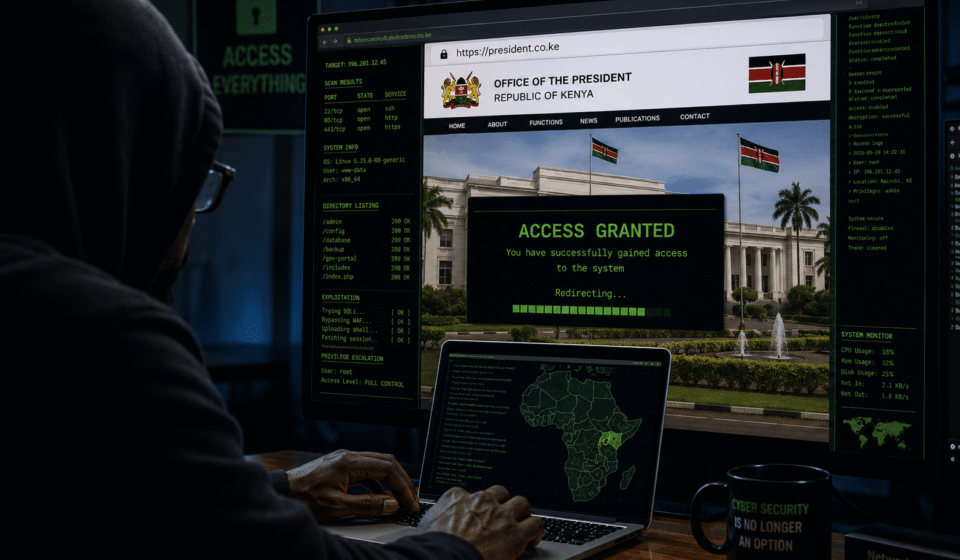

President William Ruto’s official website has finally been restored after a cyberattack forced the platform offline.
The website was compromised on Saturday after hackers allegedly took control of the homepage and replaced official content with demeaning messages targeting President William Ruto.
The attackers also demanded a ransom of five Bitcoins, estimated at Sh41 million, in exchange for relinquishing control of the website and withholding what they claimed was sensitive information.
The incident forced the Ministry of Information, Communications and the Digital Economy to temporarily restrict public access to the website to facilitate containment, forensic investigations and restoration.
ICT Cabinet Secretary William Kabogo said the move was a precautionary measure to protect the platform while cybersecurity teams assessed and responded to the incident.
“As a precautionary measure, access to the Presidential website was temporarily restricted to facilitate containment, forensic analysis and restoration efforts,” Kabogo said in a statement.
Kabogo said there was no evidence of unauthorised access to sensitive government information, data exfiltration or loss of information.
He added that government digital systems and online services remained secure throughout the incident.
The ICT Authority activated cybersecurity protocols to support the restoration process and strengthen the platform against potential threats.
The President’s website is the government’s primary digital communication platform, providing citizens with access to official presidential engagements, speeches, executive directives, Cabinet updates and other state communications.
Although the website has been restored, authorities have not disclosed how the attackers gained access or whether investigations into the breach have been concluded.
It also remains unclear whether the ransom demand was considered or whether there were any further attempts to infiltrate government systems.
The cyberattack has renewed concerns about the resilience of Kenya’s digital infrastructure.
It comes less than a year after other cyber incidents disrupted access to government online services and exposed vulnerabilities in public digital systems.