
Kenya Railways’ Kathekani School Project Highlights Mainga’s Commitment to Community Development

The completion and launch of Kathekani Senior Secondary School stands as a significant milestone in Kenya Railways’ commitment to community development, demonstrating how major infrastructure projects can deliver lasting benefits beyond transport.
Built by Kenya Railways to replace the school affected by the Standard Gauge Railway (SGR) Phase One project, the modern learning institution marks a new chapter for learners, teachers and the surrounding community.
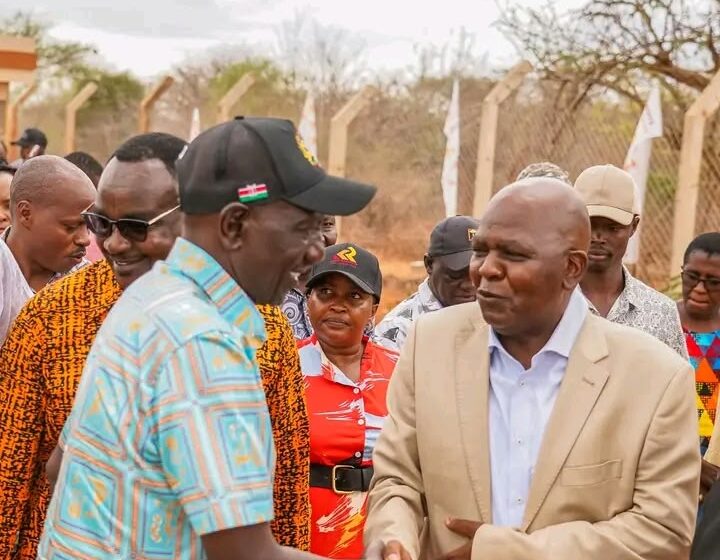
President William Ruto officially launched the school, underscoring the government’s commitment to expanding educational opportunities while ensuring that communities affected by major infrastructure developments are not left behind.
At the centre of the project’s delivery is Kenya Railways Managing Director Philip J. Mainga, whose leadership has been instrumental in advancing the institution’s construction and bringing the project to fruition.
The school reflects a broader approach to infrastructure development in which compensation, rehabilitation and community investment form an important part of delivering national projects.
While the SGR has transformed passenger and freight transport along its corridor, its construction also affected communities, property owners and public facilities. Replacing the school at Kathekani demonstrates the importance of addressing such impacts through investments that preserve essential public services.
For the local community, the new institution represents more than a replacement for the facility affected by the railway project. It is an investment in the future of young people, providing an improved environment in which learners can pursue their education and prepare for opportunities ahead.
Under Mainga’s leadership, Kenya Railways has continued to implement infrastructure projects whose impact extends beyond railway operations, with community engagement and development remaining important considerations in project delivery.
The Kathekani project provides a tangible example of how public infrastructure agencies can respond to the needs of communities affected by large-scale developments. By replacing an educational facility disrupted by the SGR, Kenya Railways has helped ensure that the pursuit of national connectivity does not come at the permanent expense of local educational opportunities.
The project also highlights the relationship between infrastructure investment and social development. Roads, railways and other major projects are often measured by their economic returns, but their broader legacy also depends on how effectively they address the needs of people living along their routes.
For Mainga, the school’s completion adds to the public-facing community development dimension of his tenure at the helm of Kenya Railways.
As the government continues to invest in transport infrastructure, projects such as Kathekani offer an important reminder that successful development must account for both the national benefits of infrastructure and the welfare of communities directly affected by its construction.
With the school now launched, attention turns to its role in expanding educational opportunities and shaping the next generation.