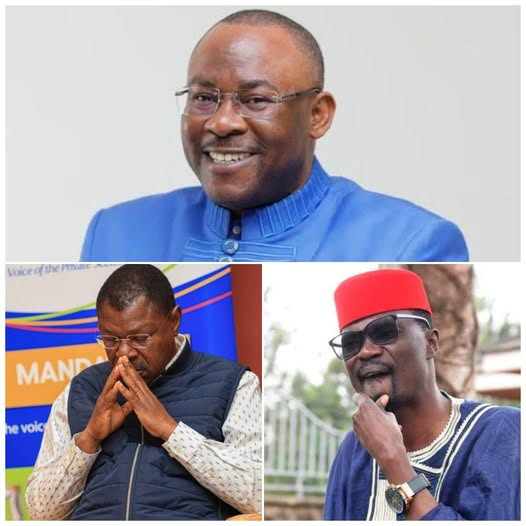

Kimilili MP Didmus Barasa has withdrawn his political support for National Assembly Speaker Moses Wetang’ula, accusing the FORD-Kenya leader of backing competing political interests in Bungoma County.
Barasa said the differences between the two leaders stem from their contrasting approaches to local leadership, development and succession, despite their shared support for President William Ruto and the broad-based government.
In a statement, the lawmaker said he had decided to realign himself politically after consultations, arguing that Wetang’ula’s local political interests were increasingly at odds with his own ambition for Bungoma.
He accused the Speaker of tacitly supporting his brother, Tim Wanyonyi, whom Barasa described as a political competitor aligned with the opposition, while maintaining his support for President Ruto at the national level.
Barasa argued that the arrangement created a conflict of interest and raised questions about FORD-Kenya’s political loyalties in Bungoma.
He also claimed that Wetang’ula’s influence over the party’s grassroots structures had complicated their political relationship, making it difficult for the Speaker to support his ambitions while his party machinery remained aligned with competing interests.
“We must part ways — not because the national vision divided us, but because the local vision did,” Barasa said.
The Kimilili MP accused Wetang’ula of promoting preferred political successors at the expense of competitive elections, saying Bungoma’s leadership should be determined by merit and the will of voters rather than family ties or personal endorsements.
“Bungoma is not a monarchy. It is a democracy premised on merit, competition, and the sovereign will of the people, not hereditary succession,” he said.
Barasa further criticised the management of the 30 per cent allocation reportedly provided for under a memorandum of understanding signed by Wetang’ula, alleging that the Speaker directed much of the allocation to close family associates and distributed the remainder to other parts of the country.
He described the arrangement as poorly managed but did not provide details of the allocation or supporting evidence for the claims.
The political fallout comes as Barasa positions himself for the Bungoma governorship race expected in 2027.
He said he would now focus on consolidating the United Democratic Alliance (UDA), building grassroots networks and forging alliances with local leaders and political parties that share his vision.
Barasa also said he remained committed to President Ruto and the broad-based government, drawing a distinction between his national political alignment and his disagreements with Wetang’ula over Bungoma’s leadership.
He indicated that his political realignment would not necessarily exclude FORD-Kenya members who share his views on local governance and oppose what he described as hereditary leadership.