
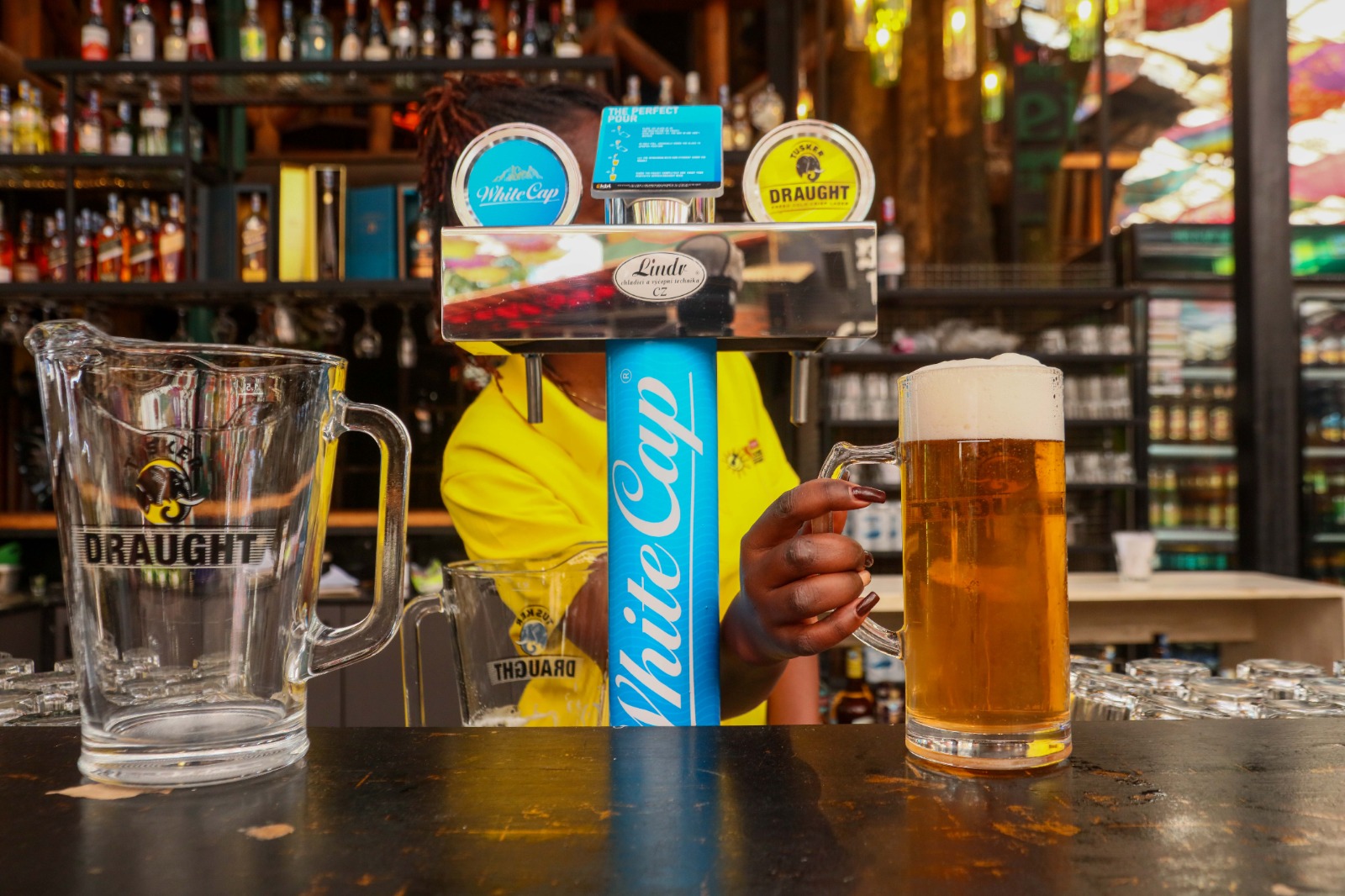

For many years, beer consumption in Kenya was synonymous with bottled beer. Most consumers preferred their beer at room temperature, commonly referred to as “warm beer”, a longstanding tradition that shaped the country’s drinking culture.
However, as Kenyan consumers became increasingly exposed to global trends and evolving social experiences, preferences slowly began to shift. Draught beer, once considered a niche offering reserved for a handful of premium establishments, started attracting attention from consumers looking for a fresher, more immersive experience.
In its early days, the adoption of draught beer faced significant challenges. Traditional draught machines were bulky, expensive and required specialised installations, making them inaccessible to many hospitality outlets.
Recognising this gap, Kenya Breweries Limited (KBL) set out to transform the experience by simplifying the technology behind draught systems. The company introduced portable and more accessible draught machines, significantly lowering the technical and financial barriers that had previously prevented many outlets from offering draught beer.
The result has been a brewery-fresh pour that is now reaching consumers in more places than ever before.
What has followed is not simply the expansion of a product, but the evolution of a social experience. Draught beer has steadily become part of occasions where people naturally gather, connect and create memories. The draught bar is no longer just another service point within an outlet; it has become part of the experience itself.
This shift matters because it signals that consumers are embracing experiences that are intentional, communal and memorable.
The transformation has been visible at some of Kenya’s biggest events and social gatherings.
At the World Rally Championship (WRC) Safari Rally in Naivasha, thousands of motorsport enthusiasts came together for one of Kenya’s most iconic sporting events. Amid the excitement of roaring engines, speeding rally cars and dusty spectator stages, people sought spaces to relax, cool down and connect with friends. White Cap Draught naturally became part of these moments, creating spaces where consumers could pause and enjoy the experience together.
Similarly, Tusker Draught found its place during Kenya’s debut hosting of the HSBC SVNS Division 2 tournament. As thousands of rugby fans gathered to cheer on their teams, draught beer complemented the electric atmosphere, offering a shared experience that matched the energy and passion of the sport.
Beyond major events, draught culture has also become deeply embedded in emerging social trends.
Formula 1 viewing experiences, for example, have evolved into much more than simply watching a race. Across Nairobi and other urban centres, F1 watch parties have become social rituals where friends gather for sophisticated banter, spirited debates and the anticipation that builds with every lap. White Cap Draught has become a natural companion to these experiences, creating an environment that encourages people to slow down, stay longer and enjoy meaningful interactions.
This evolution reflects a broader shift in consumer behaviour. Increasingly, people are prioritising quality experiences over hurried nights out. They are choosing spaces that encourage conversation, connection and shared moments over quick consumption.
White Cap and Tusker Draught continue to grow alongside these changing lifestyles, reaching more outlets, more occasions and more consumers seeking a quality pour.
As Kenya’s social culture evolves, draught beer is steadily earning its place—not simply as another way to consume beer, but as a catalyst for bringing people together.
Because ultimately, the story of draught is not just about how beer is served.
It is about how people choose to gather, celebrate and create memories together.