
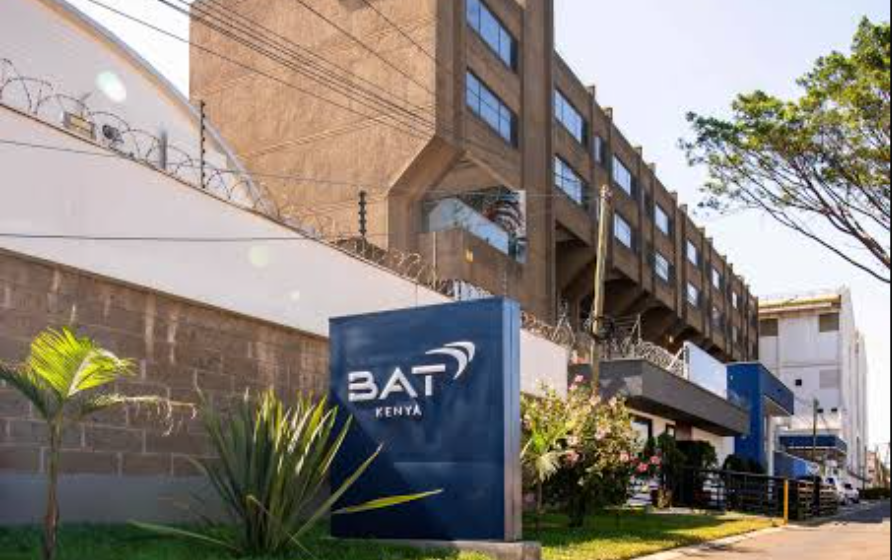

British American Tobacco (BAT) Kenya posted a modest rise in first-half profit after stronger export sales offset continued weakness in its domestic market, where illicit cigarette trade and inflation continued to weigh on performance.
The cigarette manufacturer reported a 4.6 percent increase in net revenue to Sh12.3 billion for the six months ended June 2026, marking a return to growth after revenue contracted 5.9 percent in the first half of 2025 and 18.1 percent in the second half of last year.
The recovery was largely driven by export markets, where improved product mix, country mix and a more stable exchange rate boosted sales. Higher cigarette volumes in Somaliland supported export growth, although sales in the Democratic Republic of Congo declined. The company also reported lower cut rag tobacco sales following tax increases in Zambia that dampened demand.
Despite the revenue rebound, BAT Kenya continued to grapple with difficult trading conditions in its home market. The company said illicit tobacco products now account for an estimated 45 percent of Kenya’s cigarette market, while inflation continued to squeeze consumer spending.
Domestic revenue declined compared with the same period last year, although the reintroduction of nicotine pouches in June 2025 provided some support. The smoke-free product now contributes just over one percent of the company’s total revenue.
Operating profit (EBIT) edged up 0.8 percent to Sh4.3 billion, but the operating margin narrowed to 34.7 percent from 36.0 percent a year earlier as costs rose faster than revenue.
Total operating costs increased 6.8 percent to Sh8 billion, driven by higher raw material, logistics and packaging expenses, including costs linked to compliance with new graphic health warning regulations.
The higher cost base eroded part of the gains from improved sales, leading to a 130-basis-point decline in the EBIT margin.
Net profit rose 3.1 percent to Sh3.1 billion, helped by a 40 percent jump in finance income to Sh136 million as the company earned higher returns on its cash holdings.
Earnings per share increased to Sh30.75 from Sh29.83 in the corresponding period last year.
BAT Kenya maintained its interim dividend at Sh10 per share, underscoring its long-standing reputation for returning cash to shareholders despite challenging operating conditions.
The results suggest the company is increasingly relying on regional markets to drive growth as the domestic business comes under pressure from illicit trade, rising taxes and changing consumer preferences.
While exports helped restore revenue growth, continued weakness in the Kenyan market and rising operating costs highlight the challenges facing the tobacco manufacturer.
Even so, the stable dividend is likely to reinforce BAT Kenya’s appeal to income-focused investors. The company’s share price has gained about 26 percent since the start of the year, with investors continuing to value the stock primarily for its strong dividend payouts rather than expectations of rapid earnings growth.