
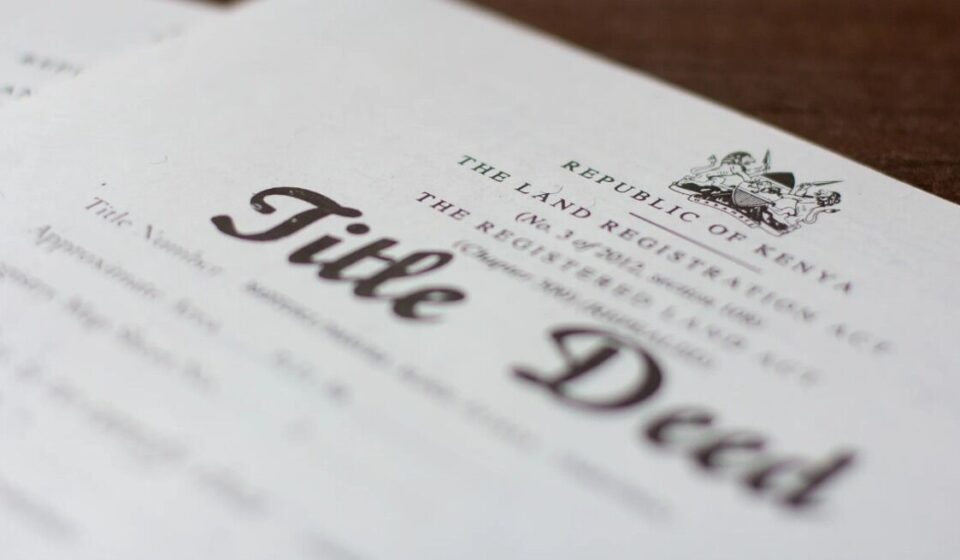

A Kenyan court has reaffirmed that a title deed is not always the final word on land ownership, ruling that a buyer who occupied and farmed land for nearly four decades without ever receiving a title had legally become its owner.
The Environment and Land Court awarded a Ruiru parcel to the estate of the late James Edward Mburu, who bought the land in 1986, took possession immediately and cultivated maize and beans on it after the seller disappeared before completing the transfer.
Although another company, Denko Properties Ltd, was later registered as the owner, it never occupied or claimed the land.
After Mburu’s death, his widow successfully argued that the family had acquired ownership through adverse possession.
The court clarified that while occupation under a sale agreement initially begins with the seller’s permission, it becomes adverse once the seller abandons the obligation to transfer the property and the buyer continues occupying it openly and exclusively for the statutory period.
The judge also ruled that constitutional protection of property rights does not shield landowners who neglect their land for decades, ordering the cancellation of Denko Properties’ title and directing that the land be registered in the name of Mburu’s estate.
The court held a simple legal lesson: in Kenya, a title deed is powerful, but disappearing for decades while someone else farms your land can cost you ownership.
The opening adds a light, attention-grabbing twist while keeping the legal facts and outcome accurate.