
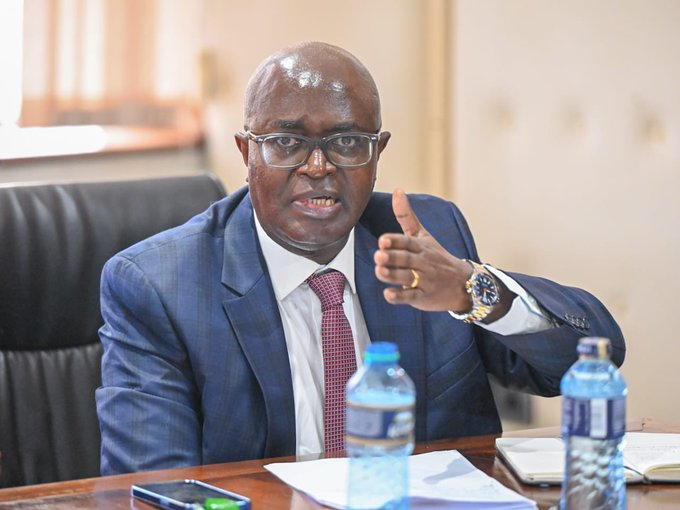

The labour and employment relations court is set to have a hearing mid this month over whether the Kenya Urban Roads Authority (KURA) Director General Silas Kinoti, is unlawfully clinging to office beyond his constitutionally permissible tenure; in a case that could potentially invalidate contracts and administrative decisions worth billions of shillings.
The petition, filed last month by Nairobi resident Masha Wario before Justice Jemimah Keli of the Employment and Labour Relations Court, names the Public Service Commission, the KURA Board, Kinoti himself, and the Ethics and Anti-Corruption Commission as parties. Justice Keli, on May 29, issued directions for the matter to be served upon all parties within 14 days and scheduled an inter-partes hearing for June 16.
At the heart of the petition is a straightforward but consequential constitutional question: has Kinoti served beyond the maximum allowable period for the office of KURA Director General?
Wario contends, based on publicly available information and institutional records, that the position is ordinarily limited to two terms of three years each, a maximum of six years. He alleges that Kinoti is currently serving what amounts to a third term, without any publicly disclosed Gazette Notice, board resolution, or lawful extension instrument to justify his continued occupation of the office.
“The continued execution of contracts, approvals, public commitments, and administrative decisions may expose public administration to constitutional uncertainty,” the petition states, warning that any actions taken outside lawful authority are ultra vires, null, and void from the outset.
The implications of the case stretch well beyond one man’s employment. KURA, established under the Kenya Roads Act, is the statutory body responsible for governance, oversight, and administration of Kenya’s urban road network — overseeing multi-billion-shilling infrastructure projects funded by public resources.
If the court finds that Kinoti’s tenure has lapsed, a cascade of legal consequences could follow: contracts he has signed, administrative directives he has issued, approvals he has granted, and institutional decisions he has authorized during the disputed period could all be exposed to legal challenge and potential invalidation.
Wario is seeking conservatory orders restraining Kinoti from continuing to discharge the functions of Director General pending the hearing, an order directing KURA to designate an acting office holder, and full disclosure of all appointment instruments, employment contracts, renewal documents, board resolutions, and performance contracts that authorize Kinoti’s continued stay in office.
The petitioner is at pains to characterize this as a matter of public governance rather than a private employment quarrel. Citing Articles 1, 2, 3, 10, 22, 23, 41, 47, 73, 75, 159, 232, 258 and 259 of the Constitution, as well as Chapter Six on Leadership and Integrity, the Leadership and Integrity Act, and the Public Officer Ethics Act, Wario argues that public office is a constitutional trust not a private entitlement and that any exercise of public power must be traceable to lawful authority.
He further contends that both the Public Service Commission and the KURA Board have failed, neglected, or refused to publicly clarify or enforce compliance with the tenure requirements governing the Director General’s office, thereby contributing to what he describes as a state of constitutional uncertainty.
The EACC, named as a second interested party, is accused of similarly failing to act on its mandate to enforce Chapter Six of the Constitution on leadership and integrity.
The court’s June 16 hearing will determine whether conservatory orders should be granted to freeze Kinoti’s executive functions while the substantive petition is determined. That is a critical threshold if granted, KURA would be required to operate without its Director General until the full case is heard and decided.
The case arrives at a moment of heightened public scrutiny over tenure compliance in Kenya’s state agencies, following years of legal battles over officials overstaying in parastatal and constitutional body positions. It also underscores the growing willingness of ordinary citizens, without legal representation, to invoke the Constitution directly in public interest litigation — Wario filed and drew up the petition himself.
The outcome could set a significant precedent for how Kenya enforces tenure limits across its sprawling network of public institutions.